
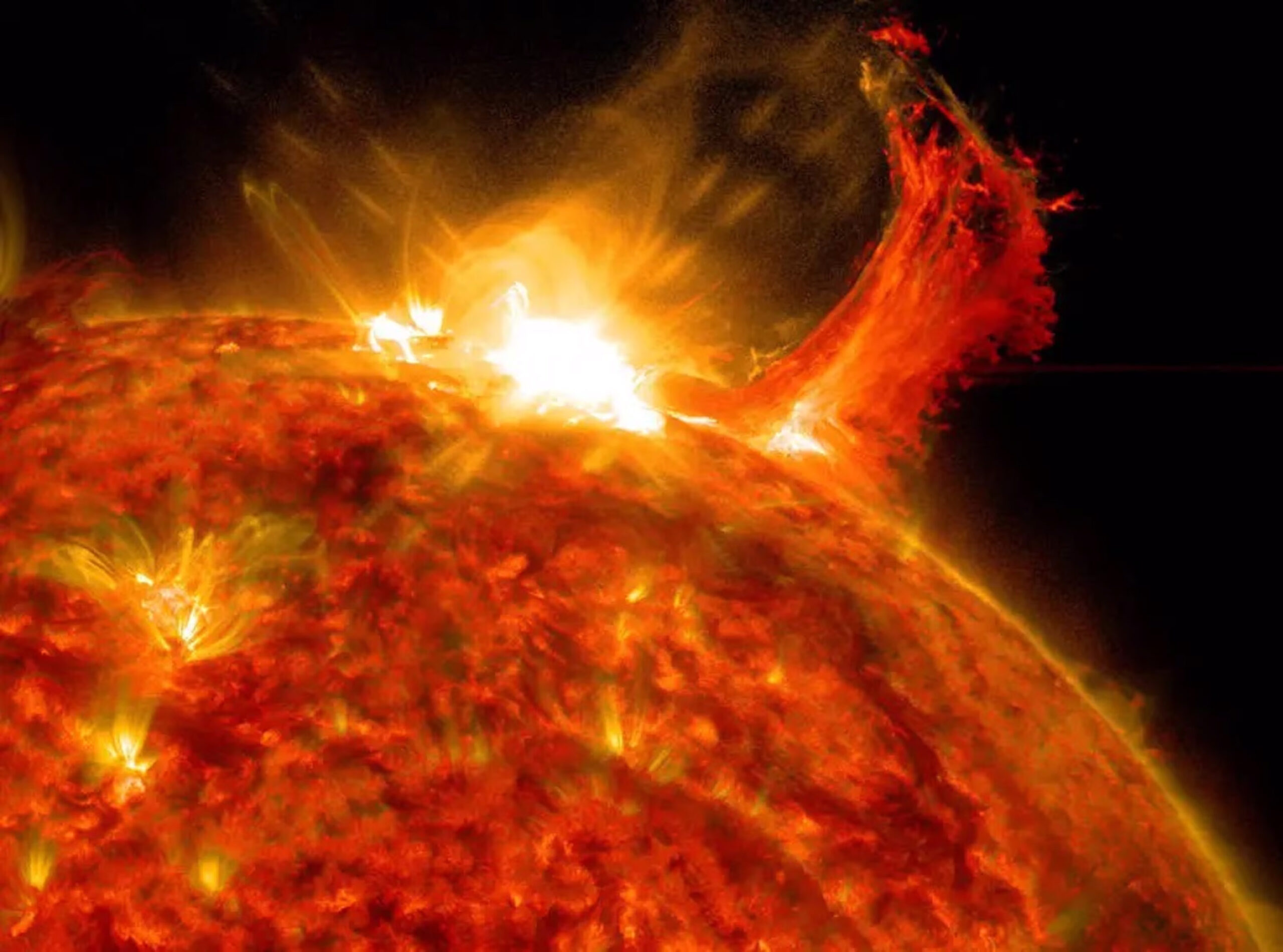
A powerful solar flare is sending a geomagnetic storm toward Earth. Learn how it forms, what effects it may cause, and why scientists are watching the skies closely.

🌍 A Solar Warning From Space
Space has a way of surprising us. One moment, the Sun is calm. The next, it flares up with tremendous energy — sending charged particles racing toward Earth.
And today, scientists have issued a fresh solar activity alert after a powerful flare erupted from the Sun.
This burst of energy, known as a coronal mass ejection (CME), is now en route to our planet. According to space weather agencies, it may trigger a geomagnetic storm, which could be mild, moderate, or — depending on how the particles hit — strong enough to disrupt satellites and communication systems.
This kind of sudden energy release reminds us of other natural forces too. You can read about similar Earth-based phenomena here:
👉 Seismic Energy Release — What It Means for Us
🔥 What Exactly Happened on the Sun?
The Sun recently produced an M-class flare, one of the categories used to measure solar strength. While not the highest category, an M-class flare is still powerful enough to:
- Disturb radio signals
- Shake Earth’s magnetic field
- Create bright auroras
- Affect satellites orbiting our planet
Behind this flare was a region of the Sun filled with twisted magnetic fields. When these fields snapped — almost like stretched rubber bands finally tearing apart — they launched billions of charged particles into space.
Those particles are now headed straight for us.
🌌 What Is a Geomagnetic Storm?
A geomagnetic storm happens when solar particles collide with Earth’s magnetic field.
This impact creates beautiful lights in the sky — the auroras — but it can also cause disturbances most people never notice until something stops working.
A geomagnetic storm can affect:
- GPS navigation
- Airline routes
- Radio signals
- Satellites
- Power grids (in rare strong events)
Most storms are harmless, but scientists monitor them closely because even small fluctuations can temporarily disrupt modern technology.
And in a world already dealing with unpredictable events — from earthquakes to asteroid sightings — this adds another reminder of how connected we are to the universe.
You can also read about one such unforgettable night here:
👉 The Night a Space Rock Stole the Spotlight
🌈 Possible Auroras — A Sky Show for Many
If the storm is strong enough, people living far from the poles might see rare auroras dancing across the night sky.
Countries in northern Europe, parts of the U.S., Canada, and even high-altitude regions in Asia could witness bright green and pink lights painting the darkness.
Auroras are harmless — and incredibly beautiful. They happen when solar particles enter the atmosphere and collide with oxygen and nitrogen, creating glowing colors.
For many, it’s a moment of peace and wonder in an otherwise busy world.
📡 Should We Be Worried?
Not necessarily.
Most geomagnetic storms cause minor or temporary disruptions.
Still, experts warn that the Sun is entering a highly active phase of its 11-year solar cycle. That means:
- More flares
- More disturbances
- And more need for global space monitoring
Organizations like NASA and NOAA are watching this storm closely. Meanwhile, discussions about space safety and preparedness continue to grow, especially in global defense and technology circles.
You can follow related global updates at www.america112.com, which often covers space and geopolitical developments in depth.
🛰️ How This Affects Everyday Life
You may notice:
- GPS being slightly inaccurate
- Radio signals dropping
- Minor delays in flights
- Internet glitches in some regions
But most people won’t feel anything at all.
For scientists, though, these storms are a reminder of how fragile our systems are. One extremely powerful solar event — like the famous Carrington Event of 1859 — could cause large disruptions. Thankfully, this upcoming storm is nowhere near that level.
💬 A Human Perspective: Why This Story Matters
Every event like this reminds us how connected Earth is to the cosmos.
We live protected under a magnetic shield we rarely think about. But when the Sun acts up, we suddenly remember:
- How small we are
- How magnificent the universe is
- And how much we depend on invisible forces we cannot control
In moments like these, science becomes not just a tool — but a comfort, helping us understand the world beyond our skies.
⭐ Final Thoughts
This potential geomagnetic storm may bring minor disturbances and possibly stunning auroras. It’s another reminder that the universe is alive — active, dynamic, and always evolving.
As scientists continue monitoring the storm, one thing is certain:
Space weather is just as important as Earth weather — and it’s something we’ll hear more about in the years ahead.