
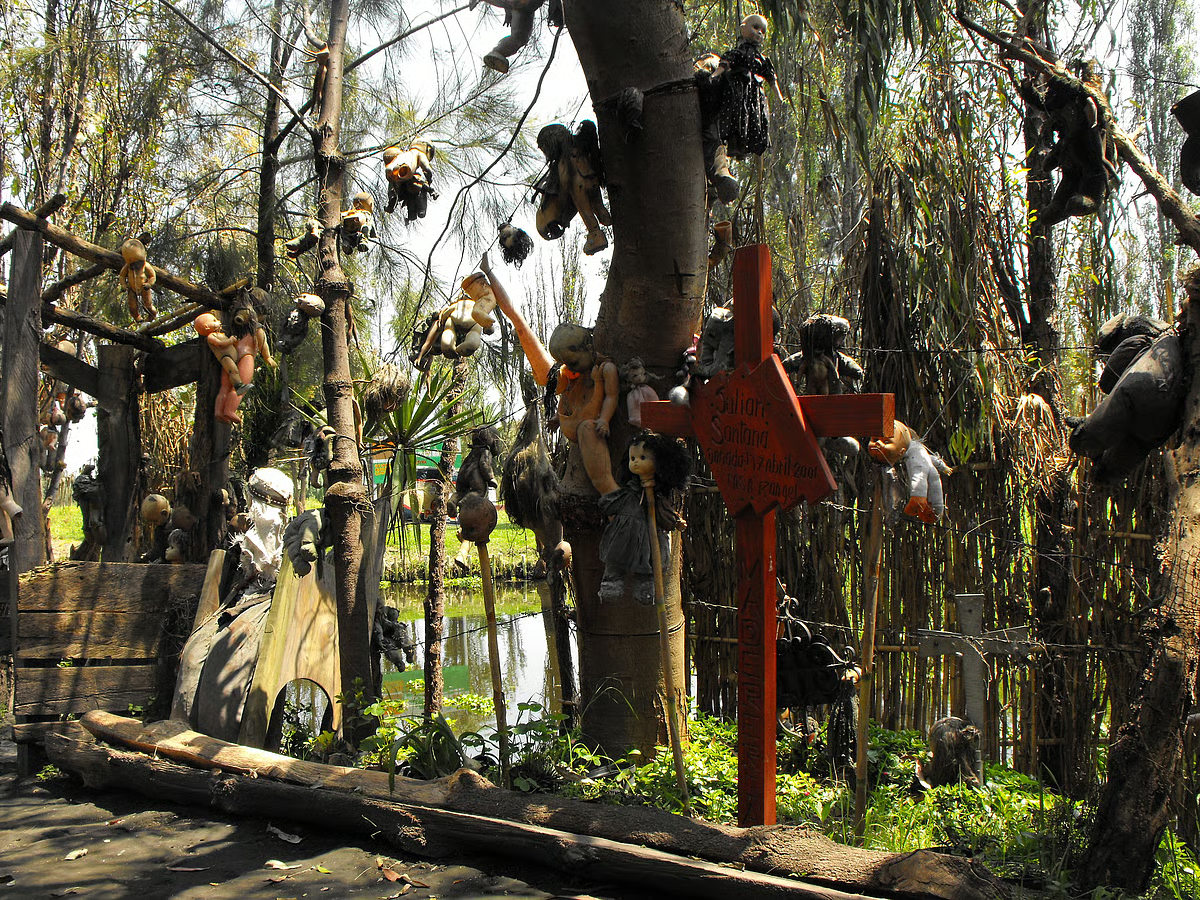
Explore Mexico’s Island of Dolls, a place of haunting beauty and mysterious tales. Hundreds of dolls hang from trees, each carrying a story, legend, and eerie presence that captivates travelers.
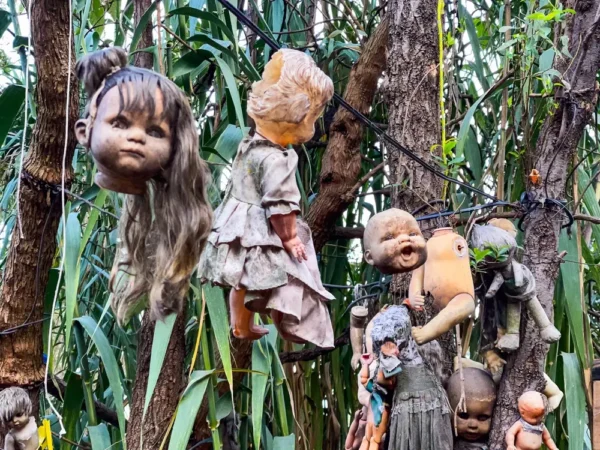
A Place of Unearthly Mystery
Nestled in the canals of Xochimilco, Mexico City, the Island of Dolls (La Isla de las Muñecas) is unlike any other place on Earth. Hundreds of dolls hang lifelessly from trees, roofs, and poles, their faded faces and missing eyes giving the island an eerie, almost human presence.
Walking through the narrow wooden paths, surrounded by murky water, visitors often feel as though the dolls are silently watching their every move, a sensation that is both unsettling and strangely magnetic.
Curiosity draws travelers from all over the world, alongside those who seek the unusual, from Finland’s quirky sports traditions (internal link: https://recital.blog/finlands-most-unusual-world-championships/) to the vibrant, symbolic rituals of the Philippines (internal link: https://recital.blog/philippines-celebrating-love-and-tradition/).
The Tragic Origin of the Island
The island’s story begins with Don Julián Santana Barrera, a man who lived on the island for decades. According to legend, Don Julián discovered the body of a young girl who had drowned in the canals nearby. Overcome with grief, he began collecting dolls to honor her spirit and protect the island from evil.
The dolls, initially few, multiplied over time. Each doll had a story, often hung in places chosen intuitively by Don Julián. Locals say he whispered to the dolls and treated them as guardians of the island, believing they could ward off spirits and bring balance to the restless energy surrounding the water.
Even today, visitors report a sense of presence, as though the dolls are alive, moving slightly, tilting their heads, or even whispering in the stillness. These accounts add to the island’s fame on platforms documenting strange phenomena worldwide (external link: www.america112.com).
The Island After Don Julián
After Don Julián’s death in 2001, the island remained. What was once a private shrine to his grief became a public curiosity, attracting tourists, paranormal enthusiasts, and photographers. The air around the island is heavy with both sorrow and fascination, a reminder of the human emotions that gave rise to this haunting collection.
Visitors often speak of shivers down the spine, strange feelings of being watched, and occasional sightings of dolls moving slightly on their own, though no scientific explanation exists. Some believe it’s Don Julián’s spirit still caring for the dolls; others think it’s the energy of the young girl who first inspired him.
Walking Among the Silent Watchers
A stroll through the island is like stepping into another dimension. Some dolls are perfectly preserved, others are broken, with missing eyes, hair tangled with moss, or clothes rotting in the humid air. The paths are narrow, forcing you to weave carefully past dangling dolls, each with its own personality, some cheerful, some sinister.
Many visitors describe a mix of fear, respect, and curiosity—a feeling similar to walking through sites steeped in unusual human traditions, like Finland’s unique sporting events (internal link: https://recital.blog/finlands-most-unusual-world-championships/) or the vibrant festivals of the Philippines (internal link: https://recital.blog/philippines-celebrating-love-and-tradition/).
Legends That Refuse to Fade
Over the years, stories about the island have grown. Some locals claim:
- Dolls move when no one is watching.
- Certain dolls follow visitors with their eyes, even from across the water.
- At night, some hear whispers, giggles, or cries, though no one else is present.
- Visitors sometimes report a sudden chill, a feeling of being guided or warned by unseen forces.
Whether these tales are true or the product of imagination, they enhance the island’s mystique, drawing travelers eager to experience a space where human grief, superstition, and legend intertwine.
A Photographer’s and Explorer’s Haven
For photographers, the Island of Dolls is both terrifying and mesmerizing. The decayed faces, hanging limbs, moss-covered clothing, and mist rising from the canals create hauntingly surreal visuals. Many consider it a place where the line between life and death, reality and legend, is blurred.
Some travelers document the island along with other unusual global experiences, such as extreme sporting traditions in Finland (internal link: https://recital.blog/finlands-most-unusual-world-championships/) or the Philippines’ elaborate cultural rituals (internal link: https://recital.blog/philippines-celebrating-love-and-tradition/), showing how fascination with the strange and mysterious transcends borders.
Why the Island Continues to Captivate
Despite its eerie appearance, the Island of Dolls continues to attract tourists, storytellers, and spiritual seekers. Some come for photography, curiosity, or adventure, while others come searching for paranormal encounters or a glimpse into human grief and devotion made tangible.
The island serves as a reminder of Mexico’s rich tapestry of folklore, superstition, and respect for the spiritual world, showing that places can be both haunting and profoundly human at the same time.
Final Thoughts
The Island of Dolls is not just a tourist spot—it’s a living story of grief, devotion, and mystery. Every doll holds a fragment of Don Julián’s sorrow, every shadow carries a whisper of the past, and every visitor leaves with a sense of wonder tinged with unease.
Whether you see it as haunting, magical, or simply intriguing, one thing is certain: The Island of Dolls is a place that will linger in your imagination long after you leave, a testament to the strange and beautiful ways humans interact with the unknown.