

The U.S. sanctions on Russia’s biggest oil companies have shaken the global market. Here’s what’s happening, why it matters.
A Sudden Move That Shocked the World
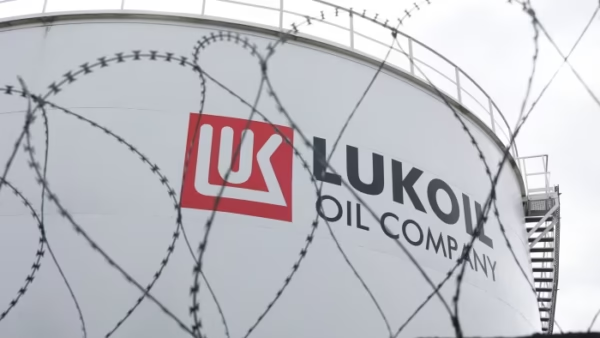
The United States has taken a bold step. It has imposed tough sanctions on Russia’s two largest oil companies — Rosneftand Lukoil.
This decision marks a turning point in global politics and energy markets. It’s not just another policy announcement. It’s a move that touches economies, trade, and even daily life around the world.
To understand the bigger picture, we also need to see how this ties into U.S.–China tensions and America’s ongoing internal struggles like the U.S. government shutdown crisis.
The world is watching closely as this new wave of sanctions unfolds.
Why Did the U.S. Do This Now?
For months, the U.S. had warned that Russia’s war in Ukraine would not go unanswered. The sanctions were introduced as a direct response to Russia’s continued aggression and its refusal to agree to a ceasefire.
Washington believes these oil revenues have been fueling the conflict. By targeting Rosneft and Lukoil, America hopes to cut off the flow of money that supports the war machine.
The message is clear: if you profit from war, expect consequences.
The Economic Shockwave
Once the sanctions were announced, the effects were immediate. Oil prices climbed sharply as markets reacted with uncertainty. Energy companies and governments around the world began to feel the tremors.
This wasn’t just about politics — it was about money, fuel, and survival.
Many nations depend heavily on Russian oil. Countries like India and China have been major importers. They now face a difficult choice. They can continue their trade, or they risk facing similar penalties.
Even platforms like www.america112.com reported that the global oil market will experience longer-term instability. Prices stay high, and consumers end up paying more for fuel, transport, and basic goods.
What This Means for Ordinary People
For many, sanctions might sound distant — like something that happens between governments. But in truth, it can affect everyone.
Fuel prices might rise, which means higher transportation costs. That can make groceries, electricity, and daily essentials more expensive. Businesses that rely on oil — from airlines to factories — could also face tough days ahead.
The decision was made in Washington. However, its ripple effects will reach living rooms and workplaces across the world.
Russia’s Growing Isolation
For Russia, the sanctions cut deep. Its oil exports are the backbone of its economy. Losing access to global markets could hurt its revenues and weaken its position in the world stage.
But Russia is not standing still. It is now seeking new partners, alternative payment routes, and even barter-based oil deals. Some experts believe that this move could push Moscow closer to Beijing — further tightening the U.S.–China–Russia triangle of global power.
That’s why understanding U.S.–China tensions is crucial to see the full story.
A Test of Global Unity
The sanctions also serve as a test. Will America’s allies follow its lead?
Some European nations have supported the move, while others fear energy shortages this winter.
This divide highlights how complex the situation has become. The West wants to stand against war, but not everyone can afford the economic cost of doing so.
That’s where policy, morality, and practicality collide.
Energy as a Weapon
Energy has always been a silent weapon in world politics. Whoever controls it controls influence. The U.S. sanctions remind us of that truth.
By hitting Russia’s oil giants, America is not just targeting revenue — it’s sending a warning. It’s saying that power can no longer come from pipelines and profit alone.
This is about redefining the balance of global power, one barrel at a time.
What Comes Next
The story is far from over. Several key questions remain unanswered:
- Will Russia retaliate in other ways?
- Can global oil prices stabilize, or are we heading for another energy crisis?
- How long will the sanctions last?
- Will nations like India and China find new oil sources or face pressure to step back?
Each answer could shape the future of global trade and energy.
For ongoing coverage and deeper insight, you can visit www.america112.com, which follows major updates in energy and international politics.
A Final Thought
The sanctions on Russia’s oil companies are not just about politics. They’re about how deeply connected our world has become.
Every drop of oil now carries the weight of diplomacy, economics, and human cost. The sanctions remind us that in a globalized world, one nation’s decision can touch billions of lives.
We continue to witness these unfolding events. One truth stands out — power and peace are no longer separate battles. They’re part of the same story, written across oceans and pipelines.