
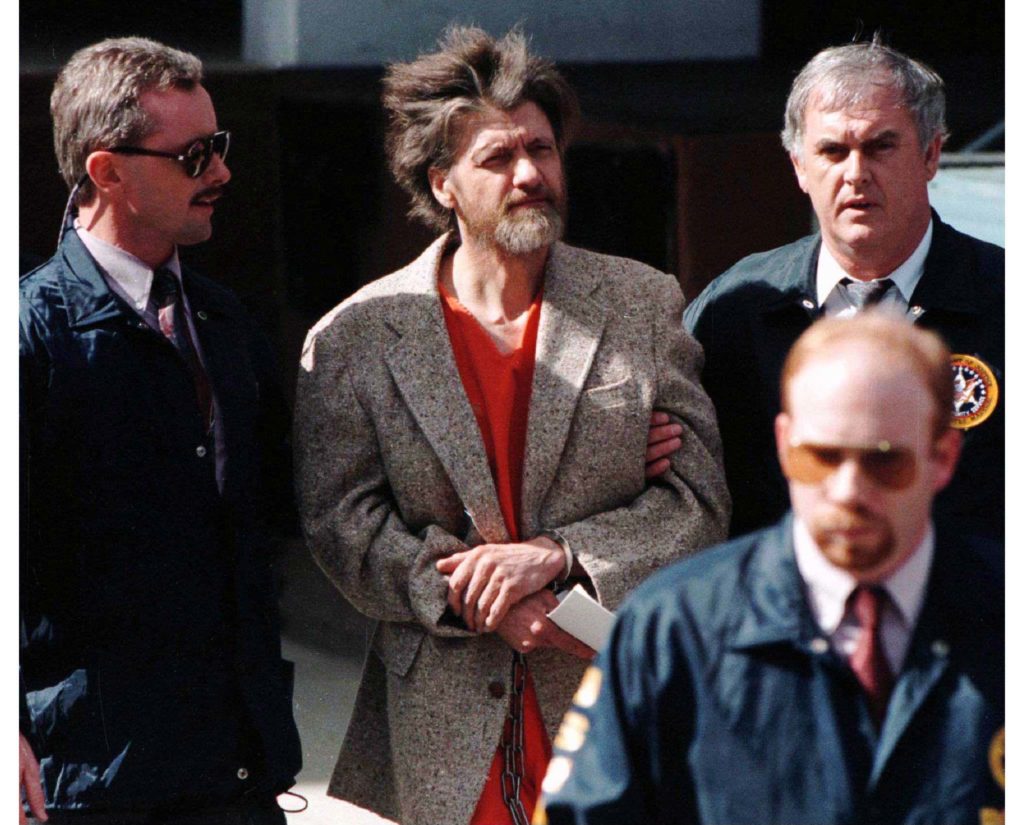
A detailed look into the life, psychology, and crimes of Ted Kaczynski “The Unabomber.” This blog explores his childhood, beliefs, choices, and the impact of his violence.
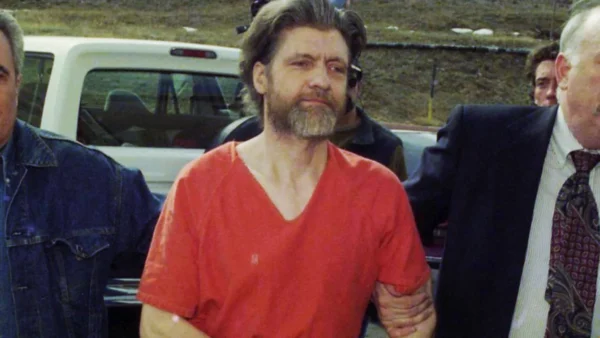
A Life That Could Have Been Different
Every criminal has a turning point.
Some fall because of desperation.
Some fall because of hate.
Ted Kaczynski fell because of loneliness, disconnection, and a belief that he alone understood a world slipping toward machines.
His story carries the same unsettling weight as the stories in Samuel Little – The Serial Killer in America(https://recital.blog/samuel-little-the-serial-killer-in-america/) and the chilling narrative in Love, Lies and the Death House of Sacramento (https://recital.blog/love-lies-and-the-death-house-of-sacramento/).
But unlike those killers, Kaczynski’s violence came from ideology, not personal pleasure.
Childhood: A Mind Too Sharp, A Heart Too Alone
Ted Kaczynski was born in Chicago in 1942.
He was a quiet, shy boy—deeply intelligent, yet emotionally distant.
What shaped him early:
- A severe illness at age nine months forced him into isolation in a hospital.
Many believe this early separation left a lifelong scar. - He struggled to form friendships.
Children found him strange, too quiet, too brilliant. - Teachers praised his genius.
His classmates avoided him.
Even in his family, he often felt misunderstood—someone who lived more in his thoughts than in the world around him.
The Harvard Years: A Child Studying with Adults
At just 16, Ted entered Harvard University.
For most, Harvard is a dream.
For him, it became a cold, lonely battlefield.
Why Harvard damaged him more:
- He was too young, emotionally unprepared for such a harsh environment.
- He lived in small, isolating dorms where he rarely socialised.
- He became part of a psychological study run by a professor—one that humiliated and emotionally pressured participants.
This experience reportedly broke down his already fragile trust in society.
Harvard sharpened his intelligence but damaged his humanity.
Academic Brilliance: A Mind Destined for Greatness
After Harvard, Ted earned a PhD in mathematics from the University of Michigan.
He specialised in complex geometric theories that only a handful of people in the world understood.
His professors described him as a “once-in-a-generation mind.”
At 25, he became the youngest assistant professor at UC Berkeley.
But something felt wrong inside him.
Teaching made him anxious.
Social interactions overwhelmed him.
Noise, schedules, and expectations suffocated him.
And so, with no clear reason, he walked away from Berkeley—quietly, suddenly, and forever.
The Retreat: A Cabin Where Darkness Grew
In the early 1970s, Ted moved to a small cabin in the mountains of Montana.
No electricity.
No water.
No neighbours.
No modern life.
He believed modern technology was destroying human freedom, and he wanted to escape it completely.
Inside the cabin, his transformation began:
- He farmed, hunted, and lived off the land.
- He kept detailed journals filled with anger at society.
- He witnessed new buildings and technology reaching even rural Montana—and it filled him with rage.
- He saw machines replacing human hands and felt humanity losing its soul.
Over the years, that rage hardened into ideology.
The Crimes: A Years-Long Terror That Shocked A Nation
Between 1978 and 1995, Ted Kaczynski carried out a series of violent attacks using explosives.
He targeted universities, airlines, professors, computer scientists, and business leaders—anyone he believed supported technological progress.
I will not describe anything technical about his devices.
Instead, here is the human impact:
● People were maimed and killed.
Families shattered.
Dreams ended.
● Universities were terrified.
Students opened their mail nervously.
Professors feared being targeted.
● Airports tightened security.
For years, the nation lived with the constant fear of a hidden threat.
● The FBI launched one of the biggest manhunts in American history.
For nearly two decades, they chased a ghost—a man with no digital footprint, no witnesses, and no traceable past.
He signed his letters “FC,” claiming to fight the “industrial system.”
It was an idea he thought was noble, but in reality, it was a path of death and destruction.
The Manifesto: A Window Into His Mind
In 1995, Kaczynski demanded that major newspapers publish his long manifesto, “Industrial Society and Its Future.”
He argued that technology stripped away human freedom and that modern society was broken.
Many disagreed with his conclusions.
But reading the document allowed investigators to finally see the human behind the crimes.
The Turning Point: A Brother’s Pain
It was Ted’s brother who recognised the writing style.
Imagine the heartbreak: realising your own brother might be the most wanted man in the country.
Yet he chose to save lives.
He alerted the authorities—one of the most painful acts of loyalty ever recorded.
The Arrest: A Cabin Full of Secrets
In 1996, the FBI finally surrounded Ted’s Montana cabin.
Inside, they found journals, writings, and evidence connecting him to years of attacks.
His cabin—silent and cold—contained the remains of dreams twisted into hatred.
He was arrested without resistance, thin, quiet, and still looking like the lonely man he always had been.
Life in Prison: A Mind That Never Stopped Thinking
Kaczynski received multiple life sentences without parole.
He was known to spend hours reading, writing, and corresponding with people who studied his case.
Even behind bars, he continued to criticise technology and society.
He died in 2023, ending a long, tragic saga of isolation and violence.
Understanding Ted Kaczynski: Lessons from a Dark Mind
His story teaches us:
- Loneliness can destroy even the brightest minds.
- Isolation intensifies anger until it becomes dangerous.
- Intelligence without empathy is a fragile, explosive mix.
- Radical ideas can grow uncontrollably when there is no one to challenge them.
His life is discussed even today in crime analyses, academic studies, and on platforms like www.america112.com(www.america112.com), which explore the psychological patterns behind such cases.
A Story of Genius, Pain, and Devastation
Ted Kaczynski could have been a respected professor, a global thinker, a contributor to the world of mathematics.
Instead, he became a symbol of how human brilliance can collapse when it loses connection, compassion, and purpose.
His life reminds us:
Greatness without love becomes emptiness.
And emptiness, when left alone, can become dangerous.