
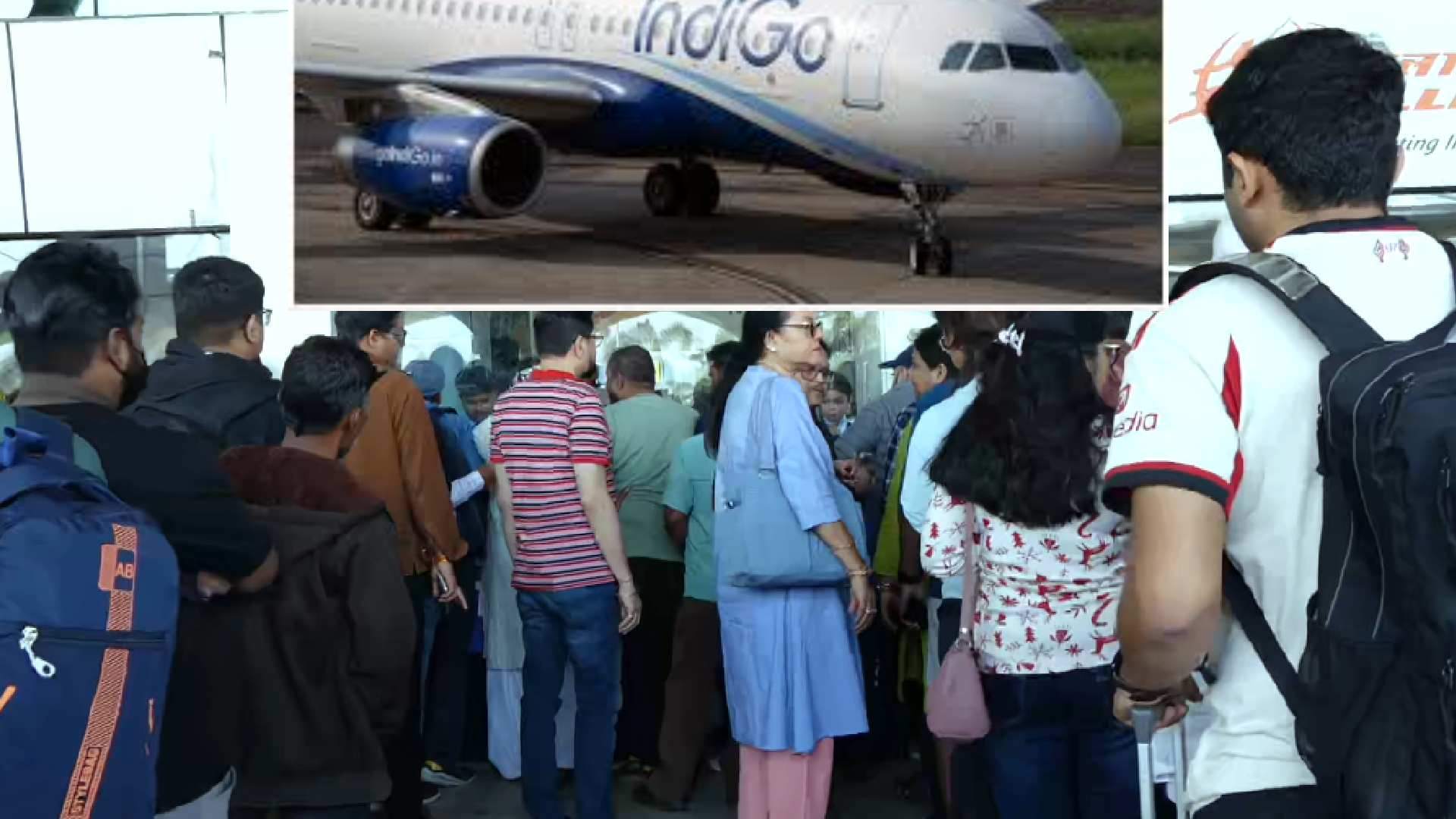
India’s biggest airline crisis left thousands stranded, fares skyrocketing, and passengers desperate for clarity. Here’s the emotional story of the IndiGo flight meltdown — and the government’s action.

✈️ IndiGo Flight Crisis Spurs Government Action — A Nation Left Stranded, A System Forced to Wake Up
It began quietly — a few delays here and there, a handful of cancellations, nothing unusual.
But within days, India’s skies turned chaotic. Thousands of passengers stood stranded in terminals across the country, staring at display boards that showed just one word, repeated again and again: CANCELLED.
The IndiGo flight crisis didn’t just disrupt travel — it disrupted lives.
This wasn’t just aviation news.
This was a national moment of panic, frustration, and emotional upheaval.
🧳 A Morning of Hope Turned Into a Day of Chaos
Imagine waking up excited for a long-planned trip, maybe a family reunion or a critical work meeting.
You pack your bags, book your cab, reach the airport…
And then — the announcement hits you like a shockwave.
“Your flight has been cancelled.”
No explanation.
No alternatives.
Just a helpless crowd, long queues, and an airport full of heartbreak.
Many passengers described standing in line for five to eight hours, trying to rebook tickets that were vanishing faster than they appeared.
Some travellers had flown in from different cities only to discover that their connecting flight no longer existed.
A scene similar to the emotional disruption seen in Delhi’s Air Crisis and Love Lost at https://recital.blog/delhis-air-crisis-and-love-lost/ — where air travel becomes a symbol of broken plans and broken hearts.
💺 Behind the Crisis — What Went Wrong at IndiGo?
The meltdown wasn’t random.
It was a chain reaction — one that revealed fragile foundations beneath India’s busiest airline.
1. New Safety Rules Overwhelmed the System
Stricter rest requirements for pilots meant IndiGo suddenly had fewer crew members available.
This is essential for safety — but the airline failed to prepare for the transition.
2. Tight Schedules, Zero Flexibility
IndiGo’s operations rely heavily on aircraft and crew maximization.
One delay triggered another, and then another — until schedules collapsed entirely.
3. Underestimation of Passenger Load
Holiday travellers, business travellers, emergency travellers — everyone was flying.
But IndiGo didn’t expect such demand, nor did it have backup plans.
4. Poor Communication
Passengers were left in the dark.
Many learned their flights were cancelled only after reaching the airport.
The crisis was a reminder that no matter how big an airline is, preparation matters — just like how national systems must prepare for growth as discussed in A New Chapter in India’s Defence Journey at https://recital.blog/a-new-chapter-in-indias-defence-journey/.
👨👩👧👦 Real People, Real Pain — Stories From the Terminals
The heart of this crisis wasn’t the airline.
It was the people living through it.
A mother trying to reach her daughter’s wedding in Jaipur missed the event because two consecutive flights were cancelled.
A cancer patient travelling for chemo missed treatment after delays stretched 18 hours.
Students going for competitive exams scrambled for overnight buses.
A father flying home for a relative’s funeral broke down at the airport when his rebooked ticket was cancelled again.
Travelers spoke of sleeping on terminal floors, of crying children, of elderly parents without medication, of anxiety, exhaustion, and helplessness.
These weren’t passengers.
These were people holding onto fragile plans that crumbled before their eyes.
💰 The Unseen Blow — Skyrocketing Fares
As cancellations increased, fares soared beyond imagination.
- A ₹5,000 ticket shot to ₹18,000
- A ₹10,000 flight jumped to ₹40,000
- Some sectors crossed ₹60,000–₹70,000, leaving people stunned
For many families, this wasn’t an inconvenience — it was financial trauma.
People began pleading on social media, begging airlines for mercy fares.
Others tried alternate routes, trains, buses — anything to reach their destination.
News platforms like www.america112.com highlighted this chaos, pushing the issue into the global spotlight.
🏛️ Government Steps In — A Lifeline for Stranded Travellers
Seeing the crisis spiral, the government stepped in with strong measures.
1. Domestic Fare Caps Introduced
To prevent airlines from exploiting high demand, strict fare caps were imposed across all distance categories.
2. Additional Flights Ordered
Airlines were instructed to increase capacity, add extra flights, and bring grounded aircraft back into service.
3. Refunds & Assistance
Carriers were told to issue full refunds, provide food, accommodation, and support for stranded passengers — especially those in emergencies.
4. Priority for Medical & Essential Travel
Hospitals, corporate offices, and state authorities coordinated with airlines to ensure essential travel wasn’t disrupted.
5. Monitoring Task Force
A dedicated team began tracking cancellations daily, ensuring compliance across all airlines.
This intervention brought immediate relief, stabilizing panic and slowing fare inflation.
🔎 The Bigger Question — Is India Ready for the Future of Air Travel?
This crisis forces us to reflect deeply.
India is flying more than ever before.
Airports are busier.
Destinations are expanding.
Demand is multiplying.
But are our systems strong enough?
- Do airlines have backup crews?
- Do airports have contingency plans?
- Does the industry have enough competition?
- Are passengers protected from chaos of this scale?
The IndiGo crisis exposed vulnerabilities not just in an airline, but in the entire ecosystem of air travel.
❤️ A Crisis of the Skies, A Lesson for the Future
Despite the mess, this incident also showed something beautiful — people helping one another.
Strangers shared food and water.
Airport staff worked through the night, comforting passengers.
Travellers exchanged chargers, blankets, space, and stories.
Even in frustration, humanity found a way to shine.
The skies may have been chaotic, but the hearts on the ground were steady.
Final Thoughts
The IndiGo crisis is more than a travel disruption.
It is a reminder that in a fast-growing India:
- Systems must evolve.
- Airlines must communicate.
- Passengers must be protected.
- And empathy must guide policy.
Flights will resume.
Schedules will normalize.
But the memories of confusion, panic, and helplessness will stay with travellers for a long time.
This moment in aviation history will not be forgotten — because it touched more than airports.
It touched lives.