
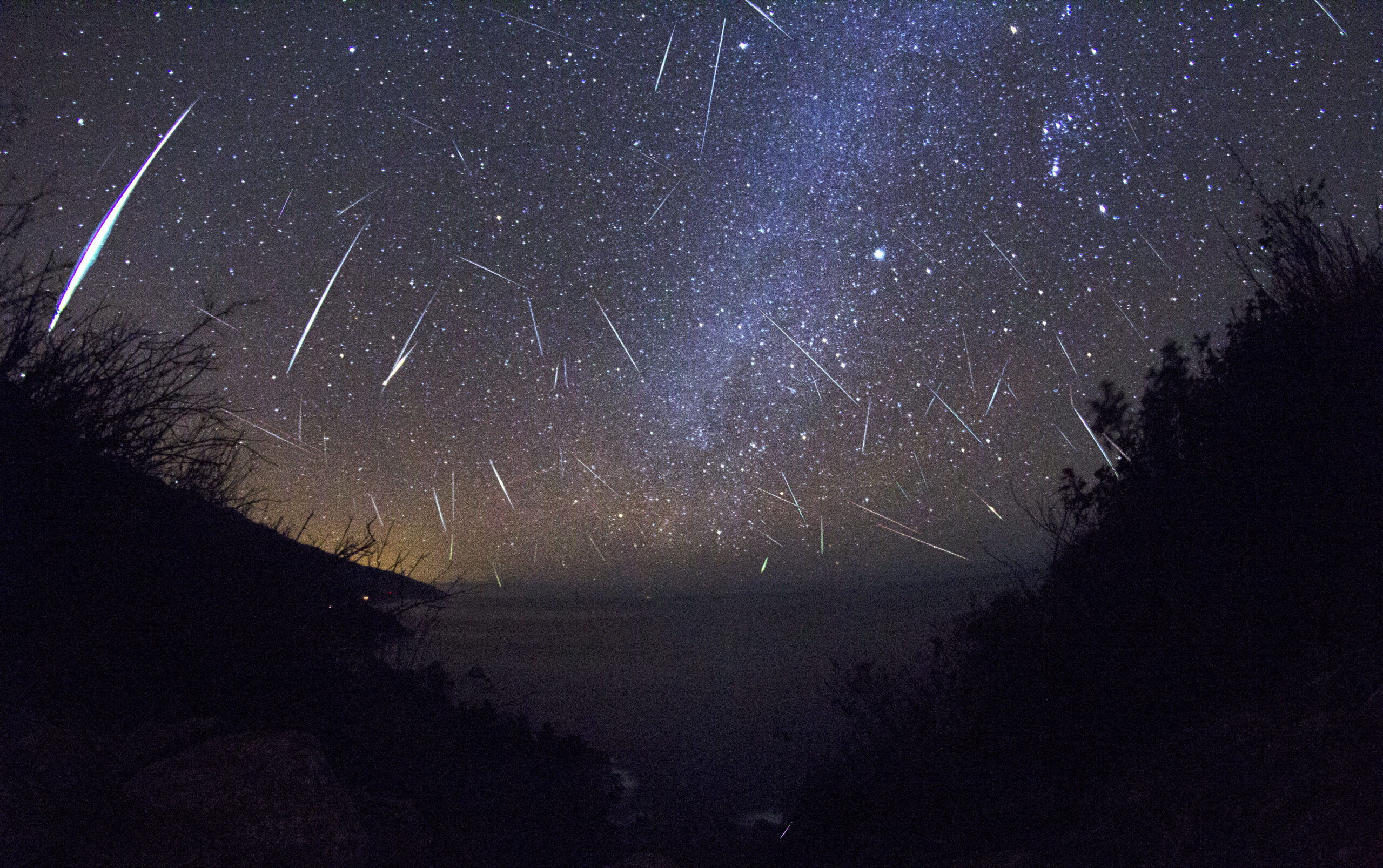
The Geminid meteor shower is active now, lighting up the night sky. A human story of wonder, science, and why looking up still heals us.
When the Night Sky Refuses to Stay Ordinary
Some nights are meant to be remembered.
Not photographed.
Not recorded.
Just felt.
Right now, the Geminid meteor shower is active, quietly transforming the night sky into a moving canvas of light.
No countdown.
No announcement.
In a world constantly shaped by change — where stories of openness and transition like Saudi Arabia’s new kind of welcome https://recital.blog/saudi-arabias-new-kind-of-welcome/ remind us that even systems evolve — the Geminids remind us of something simpler: beauty still arrives exactly when it should.
What Makes the Geminids Different from Other Meteor Showers
Not all meteor showers are created equal.
The Geminids are special because:
- They are bright and slow, easy to spot
- They appear reliably every year
- They often produce colorful streaks across the sky
Unlike most meteor showers born from icy comets, the Geminids come from a rocky object called 3200 Phaethon — a strange hybrid that behaves like both asteroid and comet.
That alone makes every streak feel a little more mysterious.
A Brief Flash, A Lasting Feeling
Each meteor lasts seconds.
Sometimes less.
Yet those seconds feel heavier than hours spent scrolling through screens.
A single streak of light can pull the mind away from worry.
From noise.
From urgency.
Much like how Jimmy Lai’s love for truth carried hope for freedom https://recital.blog/jimmy-lai-love-for-truth-hope-for-freedom/, the Geminids prove that even brief moments can leave deep emotional footprints.
When Is the Best Time to Watch?
The Geminid meteor shower is active now, with peak visibility during late-night and early-morning hours.
To truly experience it:
- Step away from city lights
- Let your eyes adjust for at least 15–20 minutes
- Lie back or sit comfortably
- Look at wide, open portions of the sky
Do not rush.
The sky rewards patience.
Astronomy lovers and night-sky watchers sharing observations through platforms like www.america112.com continue to note strong activity across many regions.
Why Humans Have Always Looked Up
Long before science named meteors, humans watched the sky.
They saw messages.
Omens.
Promises.
Even now, with all our knowledge, something ancient stirs when a meteor burns across the dark.
It reminds us:
- We are small
- We are temporary
- We are connected
The sky has always been a place where fear softens.
Science Explains It — Emotion Completes It
Scientifically, meteors are tiny fragments burning up as they enter Earth’s atmosphere.
Emotionally, they feel like:
- Wishes set free
- Time made visible
- Silence given light
The Geminids do not ask us to believe in anything.
They simply ask us to watch.
A Moment That Belongs to Everyone
You can watch alone.
With family.
With someone you love.
You can whisper wishes.
Or say nothing at all.
There is no correct way to witness wonder.
What matters is allowing yourself to pause — in a world that rarely stops long enough to breathe.
Darkness Is Not Empty
One of the quiet lessons of the Geminids is this:
darkness is never empty.
It holds light.
Waiting.
Every meteor proves that something beautiful can pass through darkness without being destroyed by it.
Final Reflection: When the Universe Speaks Softly
The Geminid meteor shower does not demand attention.
It offers it.
For a few nights, the universe whispers instead of shouting.
And in that whisper lies comfort.
The sky lights up.
The world slows down.
And for a moment, everything feels exactly where it belongs.
All you have to do is look up.