
Explore the enduring mystery of the Shroud of Turin, an ancient burial cloth bearing the image of a crucified man. Discover its history, scientific debates, and spiritual significance.
The Shroud of Turin: Unraveling the Enigma of the Ancient Burial Cloth
The Shroud of Turin stands as one of humanity’s most captivating mysteries — a relic wrapped in faith, science, and unanswered questions. Revered by millions as the burial cloth of Jesus Christ, it carries an eerie image that has baffled experts, skeptics, and believers alike for centuries. What secrets does this ancient linen hold? Why does it continue to draw pilgrims, scientists, and conspiracy theorists to Turin? Let’s dive deep into this enigmatic cloth that blurs the lines between history and legend.
What Makes the Shroud So Mysterious?
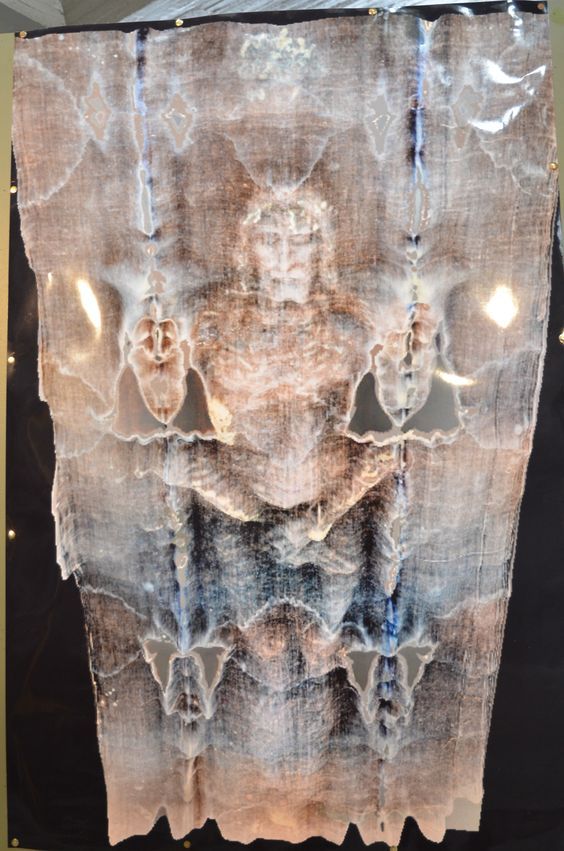
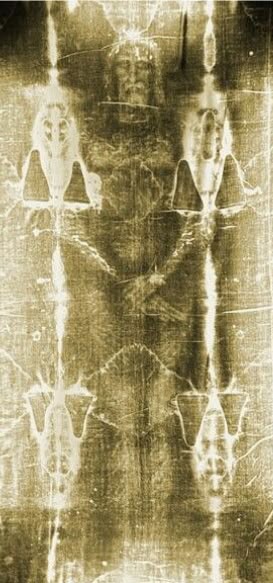
At first glance, the Shroud looks like an ordinary piece of linen, measuring about 14 feet long and 3.5 feet wide. But when viewed under special lighting, an ethereal, ghostly image of a man appears—his face marked by pain, his body bearing wounds consistent with crucifixion. The image is faint, yet hauntingly detailed, like a silent testimony from the past.
What astonishes scientists is that the image is a negative—meaning the light and dark areas are reversed, something no medieval artist would have been able to create using traditional methods. How did this image form? Was it a miraculous imprint? Or a medieval mystery crafted with unknown techniques?
For an exploration of other ancient mysteries that challenge modern understanding, see our blog on The Lost City of Atlantis.
A Journey Through Time: The Shroud’s Murky Origins
The documented history of the Shroud begins in the 14th century, when it surfaced in France amid much controversy. But believers argue that its story goes much further back—to the time of Jesus in the 1st century AD.
Stories suggest the cloth was hidden for centuries to protect it from destruction, reappearing during times of upheaval. Some link it to the Camino de Santiago pilgrimage, where relics of faith carried profound meaning across medieval Europe.
Its survival through fires, wars, and political turmoil is almost miraculous. In 1997, a fire severely damaged the Turin Cathedral, but the Shroud was saved by quick-thinking caretakers. Today, it rests in a specially designed, climate-controlled case, protected from light, humidity, and human touch.
Scientific Scrutiny: Forensic Puzzle or Clever Forgery?
In 1988, radiocarbon dating stunned the world by suggesting the Shroud dated from the medieval period (1260-1390 AD), casting doubt on its authenticity. Critics declared it a masterful forgery.
Yet, the debate is far from settled.
Scientists found that the tested samples may have come from parts of the cloth that were repaired centuries later, potentially skewing the results. Moreover, advanced forensic examinations revealed details impossible to fake—such as traces of pollen from plants native to Jerusalem’s region and evidence of blood stains matching wounds described in biblical accounts.
The image formation remains a scientific mystery. Researchers continue to explore theories ranging from chemical reactions and natural processes to bursts of radiant energy.
For the latest scientific discussions on mysteries like the Shroud, visit America112.
Spiritual Significance: Faith Meets Mystery
For countless believers worldwide, the Shroud of Turin is far more than a historical artifact—it is a profound symbol of Jesus’s passion, death, and resurrection. Pilgrims come from all corners of the globe seeking spiritual connection and reflection.
Pope John Paul II called it “a mirror of the Gospel,” highlighting its power to deepen faith. This relic challenges individuals to reflect on the intersection of faith and reason — a topic explored in our post on Freemasonry and Its Secrets.
The Shroud Today: Preserved for the Future
Today, the Shroud is preserved in the Cathedral of Saint John the Baptist in Turin, guarded with utmost care. Climate control and special protective glass shield it from damage, while strict security ensures its safety.
Despite the scientific debates, the Shroud continues to inspire awe. It occupies a unique space where history, science, and faith collide—a silent canvas that still whispers stories of ancient sacrifice and eternal hope.
Why Does the Mystery Endure?
The Shroud of Turin remains one of the world’s greatest religious and historical enigmas. Is it truly the burial cloth of Jesus Christ? Or a medieval creation designed to inspire and awe?
This question fuels passionate debate and ongoing research. Every new study seems to deepen the mystery rather than resolve it.
For readers fascinated by unresolved mysteries and deep human stories, this relic reminds us that some truths are never fully uncovered—they invite us to wonder, believe, and keep searching.