
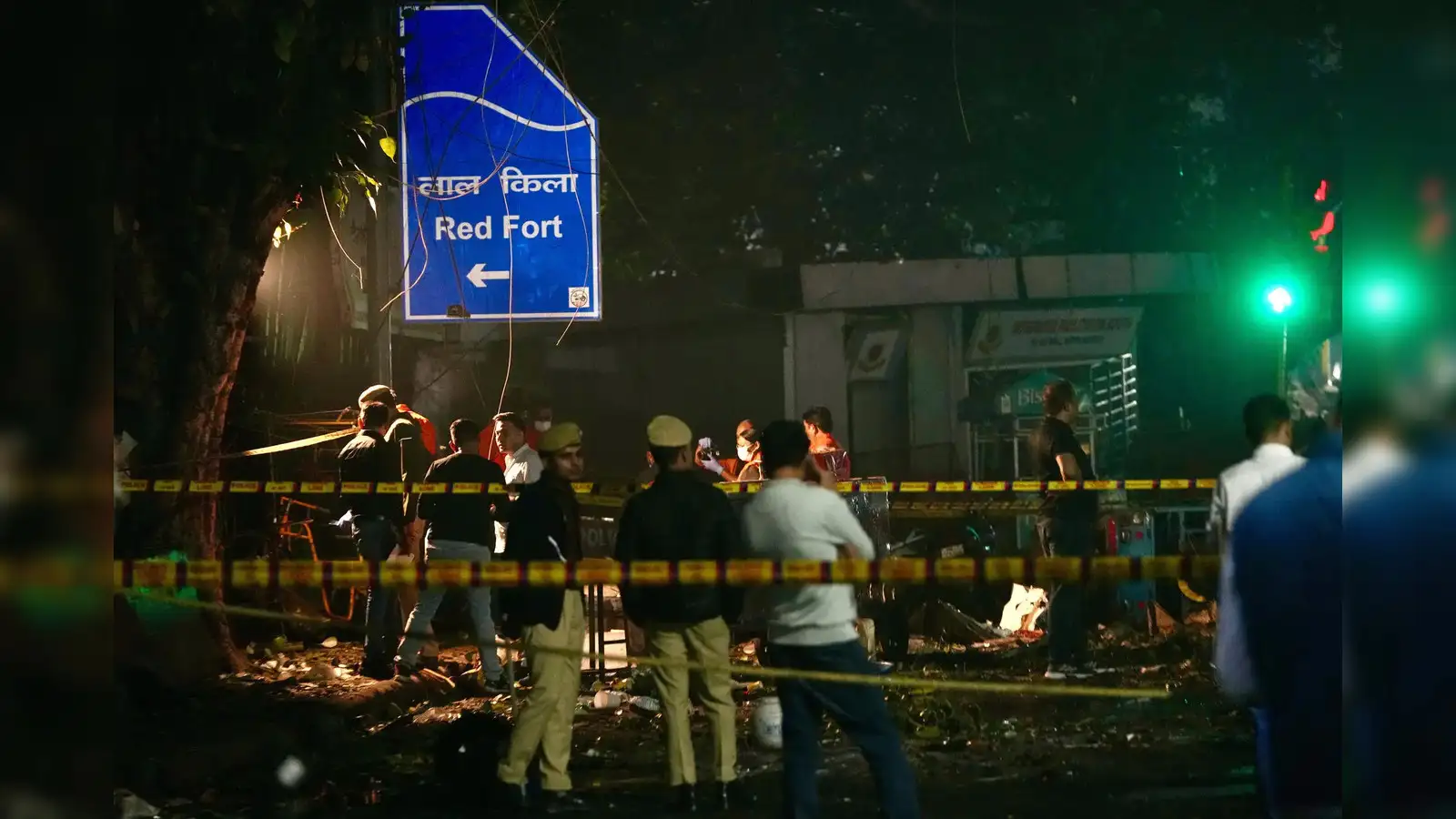
A detailed account of the terror module behind the Red Fort blast. It explains how the plot unfolded and who was involved. It also addresses why Delhi continues to stand strong.

When a City’s Night Turned Into a Nightmare
Delhi is a city that beats with colour, crowds, noise, and history. But on the night of the Red Fort blast, everything stopped.
A sudden explosion tore through the silence, leaving people shocked, confused, and terrified.
Families living nearby rushed to balconies, mothers held their children closer, and even tourists felt the tremor of fear.
Yet, just like in Terror Strikes Delhi, But Love Stands Tall, the city once again showed that its love is bigger than any act of hatred.
The Investigation Begins: Piecing Together the Broken Night
Hours after the blast, Delhi Police, intelligence teams, and forensic experts filled the lanes around Red Fort.
There were no easy answers, only questions buried under dust and debris.
Slowly, evidence began to form a shape—one that pointed to something far more chilling:
This was not an isolated act. This was an organised terror module at work.
Inside the Terror Module: A Cold, Calculated Network
Each Member Had a Job—And a Purpose
Investigators discovered that the module worked like a well-oiled machine.
- One member handled chemicals and made the explosive device.
- Another arranged transport, safe spaces, and movement.
- A separate handler communicated from abroad.
- A recruiter tried to pull more young people into the network.
This wasn’t a spontaneous idea.
It was a plan nurtured quietly, step by step, in the shadows.
Encrypted Messages and Disappearing Evidence
The group used encrypted apps, ghost accounts, and VPN layers.
They thought they were invisible.
They believed their digital footprints would vanish.
But Delhi’s cyber teams were patient.
They followed tiny clues—timing patterns, communication surges, and suspicious online activity—to uncover the digital skeleton of the operation.
Money Trails That Spoke Louder Than Words
Funding came in small, well-hidden transfers.
Amounts so tiny that they blended into everyday banking noise.
But when investigators connected the dots, the money pointed towards a bigger hand guiding the module.
Even global experts at www.america112.com have emphasized how modern terror networks survive on micro-funding channels designed to avoid detection.
The Emotional Shockwave Across Delhi
Voices From That Night
A shopkeeper near the Red Fort said,
“It felt like history crying out. For a few seconds, we didn’t know if more blasts were coming.”
A mother living close by shared,
“I just grabbed my two children and hid behind the bed. My hands wouldn’t stop shaking.”
These stories are the heartbeat of the incident—
the part that statistics never show, but emotions never forget.
The city’s resilience, as beautifully described in The Blast That Shook Delhi, Not Its Love, echoed once again.
A Breakthrough From a Single Frame
Sometimes, justice begins with something as simple as a blurry CCTV shot.
One frame showed a suspect walking unusually fast.
Another captured a bike without a proper number plate.
Another picked up a message drop at an odd hour.
These small fragments stitched the case together like threads of a giant, dark puzzle.
And slowly, the faces behind the blast emerged.
A Statement From Across the Border That Made Things Worse
While India was still piecing together evidence, a senior politician from Pakistan casually admitted that terror groups had carried out attacks “from the Red Fort to the forests of Kashmir.”
This remark didn’t just sting—it deepened the suspicion that the module had external support.
Indian security agencies widened the investigation instantly, tracing communications that crossed borders.
Why Red Fort? Understanding the Symbolic Attack
Red Fort is not just a monument.
It is the face of India’s independence, culture, and identity.
An attack near such a site is meant to do more than harm people—it is meant to break a nation’s spirit.
But terror underestimated Delhi.
It underestimated India.
The spirit remained unbroken.
India’s New Challenge: The Rise of Silent, Educated Modules
This incident shows that modern terrorism looks different:
- Operatives are more educated
- Networks are quieter
- Technology is smarter
- Targets are symbolic
- Funding is micro-managed
The Red Fort blast is a reminder that security today requires fighting both minds and machines.
Delhi’s Message to Terror: “You Can Shake Us, But You Can’t Break Us”
In the days after the blast, Red Fort reopened.
Tourists walked again.
Children laughed.
Street vendors returned to selling chaat and kulfi.
Delhi did what Delhi always does—
it rose again.
Conclusion: A Story of Pain, Courage, and Persistence
The terror module behind the Red Fort blast plotted with precision, technology, and cold intention.
But India’s investigators, citizens, and spirit were stronger.
This incident will remain a scar—
but also a lesson, a warning, and a reminder of resilience.
Delhi’s heart still beats.
And it beats louder than any blast ever could.