
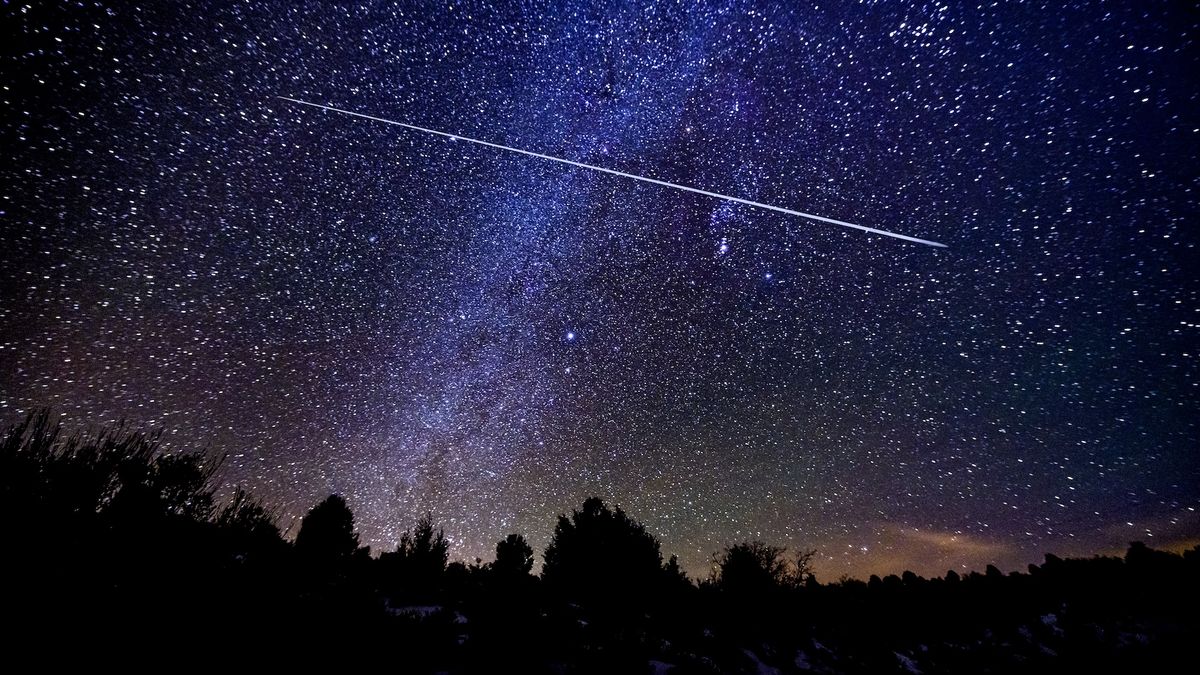
The Draconid meteor shower is expected to create a strong radar outburst in 2025. Learn when to watch, what to expect, and why this rare celestial event matters.
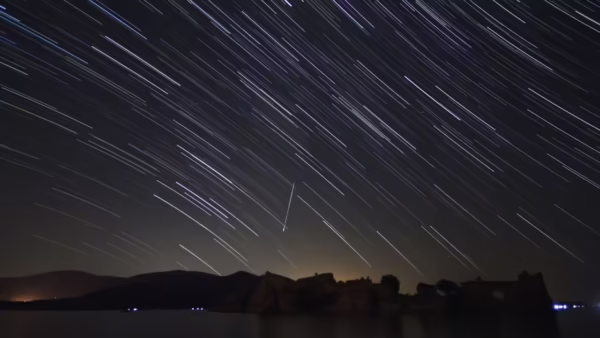
Draconid Meteor Shower 2025: A Rare Celestial Outburst Awaits
The night sky is about to tell a powerful story. This October, the Draconid meteor shower is expected to bring a strong radar outburst, unlike what we usually see each year. For many stargazers, this is more than just a passing event — it’s a moment to witness cosmic history unfolding.
What Makes the Draconids Special?
The Draconids are not your typical meteor shower. They are born from the dusty trails of Comet 21P/Giacobini–Zinner. When Earth crosses these ancient trails, bits of debris burn up in our atmosphere, creating streaks of light.
This shower usually happens between October 6 and 10, peaking around October 8. What makes 2025 so unique is the prediction of an unusually strong radar outburst during this time. Many meteors may not be visible to the naked eye, but they will be picked up in large numbers by radar systems.
This pattern of nature — sudden, powerful, and beautiful — reminds us of how Earth is constantly interacting with forces far beyond our sight. Just as La Niña’s Return: A World on Edge explores Earth’s changing climate, meteor showers like this highlight our planet’s place in a wider cosmic rhythm.
Why 2025 Could Be a Big Year for the Draconids
Astronomers expect that on October 8, 2025, Earth will pass through dense trails left by the comet in 2005 and 2012. These trails could trigger a burst of radar-detectable meteors, possibly making this one of the most significant Draconid events of the decade.
The most intense activity is expected around 15:00 to 16:00 UTC. While the meteors may be faint and not easily seen with the naked eye, radar observatories and radio amateurs are likely to detect a surge. For skywatchers, some bright meteors or fireballs may still light up the early night sky if weather conditions are favorable.
To stay updated with global alerts or last-minute changes, it’s always useful to follow trusted international news sources like www.america112.com during celestial events.
Best Time and Place to Watch
The Draconids are best seen shortly after dusk on October 8, especially from the Northern Hemisphere. The meteors seem to radiate from the constellation Draco, which is high in the northern sky.
Here are a few tips to enjoy the shower:
- Choose a dark location away from city lights.
- Let your eyes adjust to the darkness for at least 15 minutes.
- Lie back, relax, and keep your gaze wide to catch any bright meteors.
- If you have access to radio or radar equipment, this could be a perfect time to detect faint meteor activity.
Although the full moon around this time might wash out some of the fainter meteors, a few brilliant streaks might still surprise patient observers.
Science Behind the Radar Outburst
Unlike other meteor showers where the most spectacular part is visual, the Draconids in 2025 will be a radar event. This means that even though your eyes might not catch hundreds of meteors, instruments will detect them as tiny particles hit the upper atmosphere.
These outbursts are scientifically valuable. They help researchers map comet dust streams, understand how debris spreads in space, and predict future events more accurately. Just as Climate and Weather Shifts: Lives Lost, Hope Tested explores how invisible forces shape our world, radar meteor showers reveal cosmic patterns we can’t always see.
How This Affects Us
Meteor showers might seem distant, but they connect us to something bigger. The Draconids remind us that our planet constantly moves through ancient trails of dust, left by comets that have traveled the solar system for centuries.
This event also highlights how human curiosity and technology work together. While our eyes may catch only a glimpse, our radars and instruments will paint the full picture. It’s a dance between nature’s wonder and human discovery.
Preparing for the Night
If you’re planning to watch, keep your expectations realistic. This may not be a spectacular “meteor storm” for the naked eye, but it’s a remarkable opportunity for learning and wonder.
For enthusiasts, setting up radar, radio receivers, or even simple cameras pointed toward the northern sky can give you a unique view of the event. For casual watchers, just finding a quiet spot, looking up, and taking in the stars is enough to feel part of something extraordinary.
Final Thoughts
The Draconid meteor shower of 2025 is not just another date on the astronomy calendar. It’s a cosmic reminder of the mysteries above us — a moment where the invisible becomes visible through science.
As the dust of Comet 21P meets Earth’s atmosphere, we are reminded how our small world is woven into a vast, interconnected universe. Whether you’re a scientist, a skywatcher, or just someone who loves looking at the stars, this October brings a reason to pause, look up, and feel connected.