
Discover the ancient Vedic origins, four-day rituals, and modern global celebrations of Chhath Puja. Explore how this sacred sun festival connects past and present.
Chhath Puja: Tracing the Sacred Journey from Vedic Roots to Global Celebrations
Chhath Puja is one of the oldest and most spiritually disciplined festivals in Hinduism. Dedicated to Surya (the Sun God) and Chhathi Maiya, this four-day observance expresses deep gratitude for sustaining life on Earth. Unlike many other festivals that rely on elaborate temple idols, Chhath connects devotees directly with nature, rivers, and the rising and setting sun.
The Ancient Past: Vedic Origins and Epic Legends
The history of Chhath Puja stretches back thousands of years to the Vedic era, making it one of the longest continuously practiced sun-worship traditions in the world.
Rigvedic Hymns and Yogic Discipline
The earliest mentions of Chhath rituals appear in the Rigveda, which contains ancient hymns praising the Sun as the ultimate source of light, energy, and healing. Ancient sages (rishis) practiced a strict form of solar yoga, fasting without food or water while absorbing the sun’s rays at dawn and dusk. Over centuries, this ascetic practice evolved into the 36-hour Nirjala (waterless) fast observed by millions of devotees today.
Stories from the Ramayana and Mahabharata
Hindu epics deeply shaped how Chhath Puja became a cornerstone of family and community life:
- Lord Rama and Goddess Sita: According to the Ramayana, after returning to Ayodhya from 14 years of exile, Lord Rama and Sita observed a fast and worshipped the Sun God in the month of Kartika. A boulder in the Ganges at Munger, Bihar, is still revered as the exact spot where Sita performed her prayers.
- Karna and the Pandavas: In the Mahabharata, Karna—the son of Surya—stood waist-deep in river water every morning to offer prayers (arghya) to his father, establishing the festival’s signature water-offering ritual. Later, Draupadi and the Pandavas also observed Chhath Puja on the advice of Sage Dhaumya to overcome their exile hardships and regain their lost kingdom.
- King Priyavrat and Chhathi Maiya: The Brahma Vaivarta Purana tells of King Priyavrat and Queen Malini, whose stillborn child was revived after they worshipped Shashti Devi (Chhathi Maiya). Since then, Chhathi Maiya has been revered as the protector of children and family well-being.
Just as devotees seek cosmic balance and spiritual awakening when exploring Lord Shiva and the secrets of the universe, Chhath Puja invites believers to align their body and soul with the pure energy of the cosmos. [1]
The Four Days of Chhath Puja
Observed twice a year—primarily in the autumn month of Kartika (October–November) and in spring as Chaiti Chhath—the festival unfolds over four sacred days:
- Nahay Khay (Day 1): Devotees take a holy dip in a river or clean water body, clean their homes thoroughly, and eat a single pure vegetarian meal cooked without onion or garlic.
- Kharna (Day 2): Observers fast all day without water until sunset, when they prepare kheer (rice pudding) and roti on earthen stoves. After sharing this prasad with family, their strict 36-hour waterless fast begins.
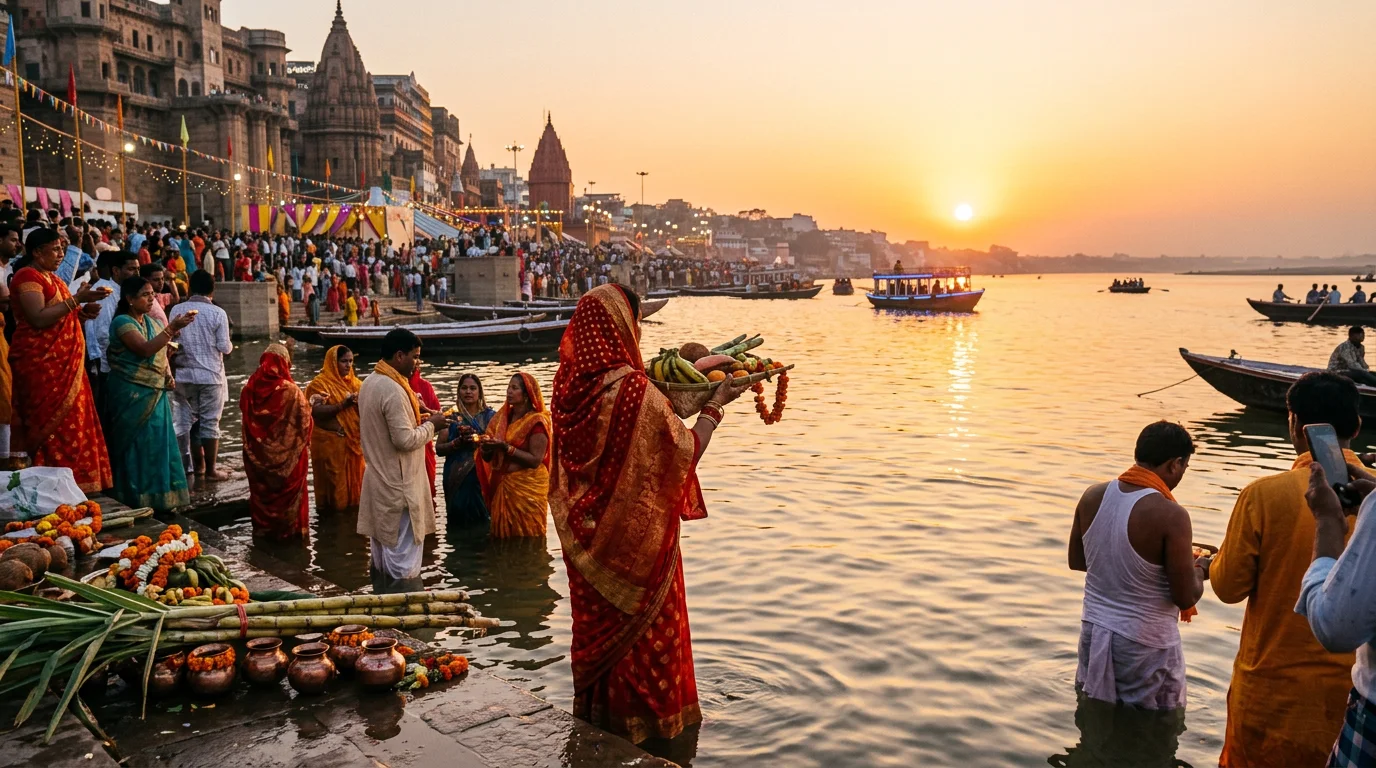
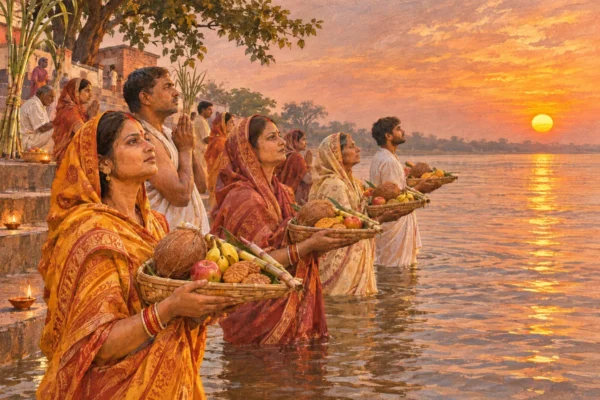
- Sandhya Arghya (Day 3): Families gather at decorated riverbanks (ghats) before sunset. Devotees stand in the water holding bamboo baskets (soop) filled with fruits, sugarcane, and thekua (a traditional sweet wheat cookie), offering prayers to the setting sun.
- Usha Arghya (Day 4): Before dawn, devotees return to the water to offer final prayers to the rising sun. Once the sun rises, they break their fast with ginger and water, sharing prasad with everyone present.
Chhath Puja in the Present: Tradition Meets Modernity
While Chhath Puja originated in the historical regions of Mithila and Magadh—spanning modern-day Bihar, Jharkhand, eastern Uttar Pradesh, and southern Nepal—its footprint has expanded dramatically in the present day.
A Global Cultural Phenomenon
Migration has carried the festival far beyond the Gangetic plains. Today, massive Chhath gatherings take place along the Yamuna in New Delhi, Juhu Beach in Mumbai, and the Hooghly River in Kolkata. Internationally, diaspora communities celebrate Chhath with equal devotion in Mauritius, Fiji, Suriname, Trinidad and Tobago, the United Kingdom, and across North America. For readers interested in how global traditions and world events intersect across borders, platforms like America News World regularly highlight stories shaping communities worldwide. [1]
Eco-Friendly Values and Community Unity
In the modern era, Chhath Puja stands out for its inherently eco-friendly nature and social equality:
- Zero Pollution: All offerings use biodegradable materials like bamboo baskets, clay lamps (diyas), banana leaves, and fresh harvest produce. No chemical idols or plastic items are immersed in the water.
- No Priests Required: Chhath is one of the few Hindu festivals where devotees perform rituals directly without intermediaries, emphasizing personal discipline and equality at the ghats.
- Folk Music Revival: Traditional Bhojpuri, Maithili, and Magahi folk songs (Chhath Geet)—popularized by legendary singers like Sharda Sinha—continue to unite generations, blending nostalgic melodies with modern digital broadcasts.
Much like the deep-rooted local devotion and living folklore found when visiting the mysterious Betal Mandir in Goa, Chhath Puja proves that ancient faith thrives when communities pass down stories, songs, and shared reverence from one generation to the next. [1]
Final Thoughts
From ancient Rigvedic hymns along the Ganges to vibrant sunrise gatherings across the globe, Chhath Pujaremains a timeless celebration of gratitude, purity, and resilience. By honoring both the setting and rising sun, the festival teaches a simple yet profound truth: every ending carries the promise of a bright new beginning.
Discover more from recital.blog
Subscribe to get the latest posts sent to your email.